Turns out even a ruler of the world has to partake in less than enthralling, common-place activities such as taking an English 102 class and creating a blog for it...
Following a related theme of the previous post, particularly the part where I mentioning the 1920's psychology experiment on conditioning a response of fear where previously none existed; reminded me of my own take on the experiment during one of my high school years. After learning in my psychology class of the Watson and Rayner experiment involving a 9 month old male child I was intrigued. The boy in the study was nicknamed Albert, and he was influenced to produce a negative emotional response such as avoidance, and crying following a loud noise of a hammer striking a steel metal bar when he was presented with the object he had previously had a neutral reaction to (Little Emotional Albert). [Below is actual video footage of the experiment by John B. Watson and Rosalie Rayner.]
After learning of the experiment in class, I was compelled by the results, which showed that the child did learn to fear the objects as a result of associating a loud, fear-inducing noise in tandem of viewing the objects in the study and later learning to generalize the fear response to other similar objects. Later on, while at home, a particularly annoying teen aged sibling was practicing the art of getting on my nerves yet again. Then an "evil" idea concocted in my mind. I informed said sibling of the study and sarcastically joked that since the behavior they were displaying on a continuous basis was annoying, I was going to test a similar experiment on them. A few days later, using some roses that were in the house, I nonchalantly sat next to said sibling on the couch, while we were watching TV (in clear view of the sibling) and pretended to be fascinated by one of the flowers. Then ever so often I would make a loud "accidental" noise with some metal pieces next to me, and then quickly raised the flower in the siblings view. The sibling was startled and would look at the flower I was holding up and then at me with an not pleased look. After a few cycles of this, the said sibling finally put two and two together, and realized what I was doing (since I had made the grave error of informing them of my experiment intentions previously). And in the true fashion of the annoying sibling behavior, the sibling rushed to our mother babbling about the horrible experiment I was doing. Needless to say, even though I eloquently and charmingly (or so I thought), defended my scientific reasoning, my mother wasn't buying it and told me to stop (Basically my mother inhibited science; I was merely trying to see if the results were reproducible. I would of course have later deconditioned the sibling. It was, after all, just a joke...cough...cough.)
My experience also highlights how the actual "Little Albert" experiment came to be generally viewed by society as being unacceptable, and unethical because it was creating an intentional phobia on the child. On a side note, question that I had (still have), is was the whole experiment in vain? Did the child really learn to fear those specific related objects with the specific characteristics? Or did he learn to fear unfamiliar objects coming toward him, near him and/or coming in contact with him? What can be said is that the child did display a negative emotion after the loud fear-inducing stimulus was presented and also later when viewing the objects without the loud noise. But did he truly fear those specific objects? I can't say I'm 100% convinced. After searching (today) to see if anyone else has a similar view on the test results, I found a book titled "Personality Theories: Critical Perspectives" by Albert Ellis that on page 255 seems to pursue a similar objective view. The book is available on Google Books (some pages are omitted), and it seems like an interesting read for anyone intrigued on the subject.
Lastly I leave a comedic video showing that experiments like mine were are perfectly innocent and harmless. Okay....maybe these experiments should be avoided, but siblings/"friends" shouldn't tether with the threshold of being too annoying to handle as they might inspire such unethical psychology experiments
Slanted reporting occurs all around; from news sources, articles, videos, advertisements, company marketing, campaigns, politics, independent sources such as blogs, etc., and even in the scientific community. The underlining message is that we are not immune. Usually sooner rather than later, most will face the underlying bias that is presented at times, ever so slightly and at other times as bold, unrestricted, plainly-evidenced biased statements.
This slanted reporting can come in many forms: by the use of descriptive words that are otherwise unnecessary, such as "The incredibly important, field-changing scientific discovery/advancement..." (made-up example). "Incredibly important, field changing" are descriptive opinions that could be debated. Someone could agree that, yes, the scientific discovery is that as described; but just as easily someone could argue that the importance of the discovery is relative and not actually applicable as "changing the scientific field." To be free of slanted biased reporting, the sentences would have to read as, "The scientific discovery/advancement..."; which may not be as attention-grabbing as the previous version and that may be why such descriptive tactics are used.
An example of this is the media coverage regarding recent reports that at times seem to use vastly different descriptive words based on the color of skin of the participants. They downplay the acts of some, and harshly condemn the acts of others, in what appears to be a continuing pattern based on antiquated racial discriminatory divides. The following video is a compilation made by bravenewfilms.org, of news clippings that highlight this issue.
Reporting such as seen in the video, or in my example of the scientific discovery, create associations in the mind that play on the thoughts, ideas, emotions by suggesting what one should react. To the not subjective viewer/reader, their thoughts could be influenced into thinking, "Why yes, this scientific discovery is incredibly important to the field." Or, "Yes, those acts committed by those people are horrific. And the acts (equally or more violent or destructive) committed by this other group are just a little out of control, nothing major. Such things happen. They're just displaying their passion on the topic. It's harmless." Such slanting reminds me of the Watson and Rayner 1920's well-known experiment involving an infant nicknamed Little Albert, where the child was conditioned to fear/create an association of fear for an object he previously had a neutral, if curios perception of ("Little Emotional Albert). He then showed fear of similar objects, that previously also did not enact a fear response. In a similar way, we humans are many times easily influenced by what we're told, what we're made to feel or not feel, and what associations and conclusions we're guided to make. It's one reason marketing and advertising with its slanted reporting is successful; it conditions our way of thinking and responding.
Another way slanted reporting occurs is when information is purposefully withheld, or not focused on as much, to change the perception of the information presented. An example of this is a video I found on the history of Country Music. [The first part of the BBC documentary is shown below]
It states that the origins are from a "distant time and place", yet it
only focuses on the contributions to country music from white Americans
and makes it seem as if it was their creation. In the video it is stated
that country music's "niche was the white working class." Yet it fails
to mention that the origin and creation of country music, country style
of clothing, techniques of the ranching livelihood and the country lifestyle were from Mexico. History shows
that the first vaqueros, Spanish for cowboys, were Native
American, Mexican and African American people hired by Spanish settlers
in the southwest of the U.S. and northern Mexico (as is now
geographically defined) as early as the 1500's as contractors in cattle
and horse ranches (Livingston, "Vaqueros"). It was they, and later,
largely and mainly the Mexican people who made, developed and made
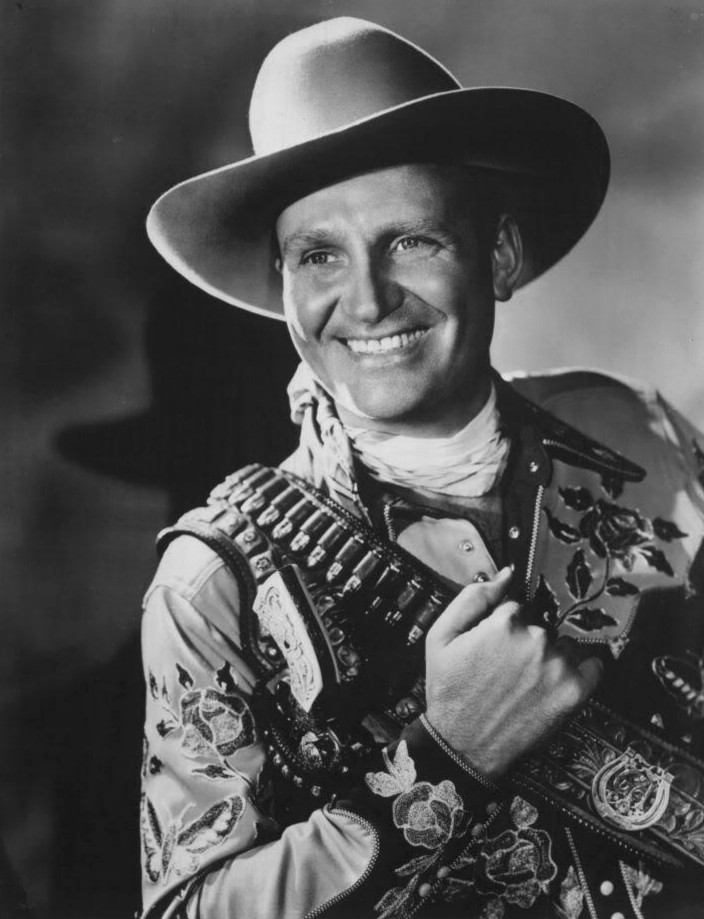
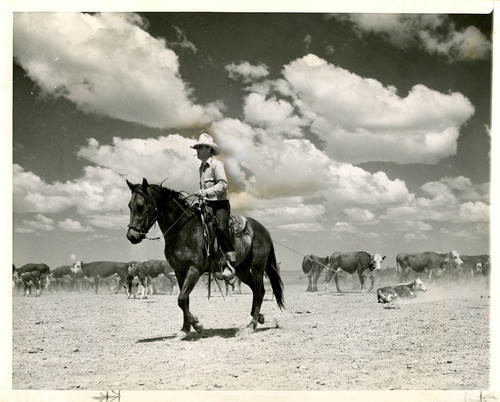
known, the vaquero/cowboy way of life to what it is now know as (Livingston, "Vaqueros"). Later on, white American's living in nearby areas adapted the Vaquero customs, music, lifestyle, livelihood, and clothing. The following pictures show the similarities in the style of dress used widely to represent American county music and the style of dress of the original Vaqueros, and creators of the image, lifestyle and music.
Gene Autry: A White American cowboy of the 1930's
White American cowboy in 1939
Painting of a Mexican Vaquero around 1830; unknown artist.
19th Century (1800-1900) Mexican Rural Vaquero Guards
Mexican Revolutionary (Emiliano Zapata) who made use of the Vaquero style of dress. He died in 1919.
The video documentary on the history of country music is not complete and therefore slanted in its reporting because it fails to mention where the White American cowboys first observed and later imitated the music, lifestyle, etc from.
All in all, slanted reporting in itself is not necessarily harmful. A descriptive word(s) to describe the "unusually hot weather" instead of reporting the weather as simply, 110 degrees Fahrenheit (example from ENG 102 class), is nothing to think twice about, or shocked at. But slanted reporting can make a source seem not credible and faulty, especially what is meant to be a news source or a documentary; when and if they present what could be described as vastly different discriminatory verbiage, or when they omit information. Unless all news sources, documentaries, advertising, etc change these tactics, the only real solution is to be mindful of what we see, read, and ultimately think.
[Disclaimer: I actually have no affinity for country music, neither the original Mexican "rancheras, norteñas, corridos" or the influenced "American" country music. I actually can't stand most of either. And the style of dressing doesn't appeal much to me either.]
Livingston, Phil. "The History of the Vaquero." The History of the Vaquero. American Cowboy. Web. 15 Nov. 2015. <http://www.americancowboy.com/article/history-vaquero>.
"Vaqueros." Bullock Museum: The Story of Texas. Bullock Texas
State History Museum. Web. 15 Nov. 2015.
<http://www.thestoryoftexas.com/discover/campfire-stories/vaqueros>.
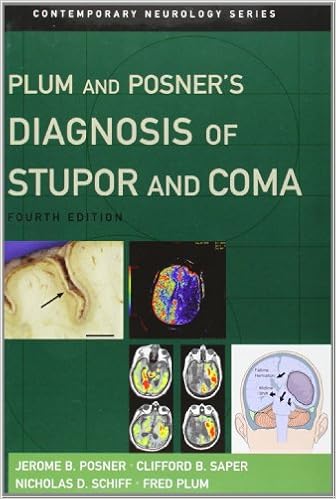
The brain interests me; no surprise there (mentioned it in the last two blogs already). Recently I was reading Plum and Posner's Diagnosis of Stupor and Coma by Jerome B. Posner, Clifford B. Saper, Nicholas D. Schiff and Fred Plum and have found the material very intriguing. In particular a section on consciousness and the difficulty in recognizing this level of brain function caught my attention.
On page 5 it talks about consciousness and it defines it as the ability/process of being cognizant of the self and the environment surrounding and the connection realized between the two. It goes on to describe the difficulties of determining consciousness by simple observation because some patients are conscious but not able to respond. Such as with locked-in syndrome where a patient has paralysis of all four extremities as a result of "de-efferented" nervous system signals. In simpler terms, the signals normally sent through the nervous system from the brain to the body, -efferent- are no longer making that journey and therefore whole body paralysis occurs. The mind remains intact and the patient is fully aware and conscious of the ongoing activity surrounding them, but is not able to easily respond (some individuals can learn to communicate through eye blinks - 1 blink for yes, 2 blinks for no, etc).
Another possible reason consciousness is difficult to determine would be personal or psychological as a choice of the individual to not respond.
The text goes on to describe how consciousness could be mainly comprised of two parts, the content, as the overall grouping of activity of the brain and arousal of the brain system in function to create the awareness of self and environment. But the intriguingly, interesting part is that if a lesion happens to occur in a certain part of the brain, it could cause what is called functional loss of consciousness. What could happen is better described in direct quote (still from page 5):
"Such patients
may have preserved awareness of most stimuli, but having suffered the loss of a
critical population of neurons (e.g., for recognizing language symbol content,
differences between colors or faces, or the presence of the left side of space),
the patient literally becomes unconscious of that class of stimuli. Patients
with these deficits are often characterized as "confused" by
inexperienced examiners because they do not respond as expected to behavioral
stimuli."
What this means is that, patients
with certain lesions that affect, or loss of/at certain specialized
neuron groups, such as recognizing colors, results in the individual not
being able to comprehend the meaning of colors; literally they could
have lost the ability to even have a definition of the concept of colors
and therefore in relation or as a result, the ability for color
identification is impaired. In other words, the content does not arouse
the brain system to recognize the stimuli. Furthermore, to someone
examining this brain function in the individual, it might erroneously
seem as though the individual is merely confused and just needs some
time to figure out/remember the colors for example. In actuality it
could be that the individual doesn't have the brain function/neurons
working properly to do so.
It's fascinating and
thought provoking to think of how a small part of of consciousness works
and the difficulty in recognizing it in others. But the real question
is why am I always thinking about brains? Is it some Freudian
subconscious Zombie tendency? I kid, the whole concept of zombies is
silly anyways.
Source:
Posner, Jerome B., Clifford B. Saper, Nicholas D. Schiff, and Fred Plum. "Pathophysiology of Signs and Symptoms of Coma." Plum and Posner's Diagnosis of Stupor and Coma. 4th ed. Oxford: Oxford UP, 2007. 5. Print.
With the fast, exponential growth of human-internet interaction, used
as a platform for idea/thought, knowledge, and media sharing, seen since the
implementation of the World Wide Web from 1990 to today; it is difficult
to not extrapolate that this expansion will indeed continue. That sharing
our lives and becoming aware of the lives of others, from the personal
to the professional (individuals and organizations) and academic, will become evermore integrated
aspects of our lives as technology continues developing.
On
a small scale, this progression has been evidenced in blogs. In the
early years in the short history of blogs, their main purpose was, as humorously concluded on spellbrand.com, to share, "feelings about politics and [...]
recipe(s) for awesome peanut butter cookies." A simple way to say that
the audiences were few, as access to computers and internet were
not as vast as today, and the bloggers were mainly individuals interested in
sharing what could be classified a common-place topics that were primarily from a personal aspect. As the price of computers and internet access decreased and became affordable to the mainstream population, blogging saw an inverted increase; not only in amount, but in type.
Today, there are various kinds of blogs. There are personal blogs, where individuals share aspects of their lives primarily for people they know and who care about their lives. Casual/professional blogs can be written by a single person or multiple, and intertwine aspects of someone's life and some specific interests, such as cooking, travel, parenthood, relationships, etc. A professional blog is one that usually (not always) supports the writer financially, where the writer spends a significant amount of time blogging (may be their primary "job"), and has a larger than average fan base. There are also blogs run by organizations such as companies/businesses, government divisions, educational/academic institutions, etc.
Personally, most blogs to me, especially the personal, casual/professional, sometimes the professional blogs seem globally repetitive and somewhat monotonous. Kind of like seeing a few pictures of wallpaper and it seeming as though you've seen them all. [The picture below represents my usual response to most content on personal and casual/professional blogs].
Even though most blogs don't manage to capture my enthusiasm or curiosity, there are a few types that do. Some examples are blogs that are humorous, sarcastic, research/academic, intellectual/philosophical based blogs (not all necessarily in the same content).
Here's two examples of blogs that do captivate my attention.
I Can Haz Cheezburger: This is "blog" that I actually do visit every once in a while. A "blog" because it is a mixture of website/media upload/sharing site. Users can share media from other sites or upload their own and use the site's tool text creator to add funny and/or misspelled text to the pictures. When the site began, and the reason it became famous was because of the creation of humorous pictures with cats and mainly misspelled text/captions. As the site gained a viral fan base, it expanded to using pictures of other animals, and drawings, videos, pictures of a variety of other topics. Overall it's an entertaining site good for some laughs.
I Can Has Cheezburger "classics" featuring a cat and funny and/or misspelled text.
The site also presents real stories such as one about a cat named Bubba who is a "student" at a California High School.
Original caption says: He Is a Very Serious Student
High School ID card for their Cat Student
And a story about a rescued kitten who had been badly burned. And a trip the kitten and the new human took from California to New Jersey on a motorbike after the kitten healed.
Next is two similar blogs of the same type. They are both academically/research inclined neuroscience blogs that share news on recent neuroscience related discoveries or cultural changes related to the topic. Such as the first one, Law and Neuroscience, backed by Vanderbilt University, which also shares information on how discoveries in neuroscience could, do and have affect law. This newly found blog is interesting to me because it delves into a connection I hadn't given thought to previously.
Neurophilosophy is a blog backed by The Guardian, an online news media outlet. This blog has articles on a variety of topics relating to neuroscience relating to connections with philosophy, technology, and neural circuitry discoveries in other animals as well. It is also a newly found blog, and one I like for its diversity in thought provoking ideas
.
In contrast, a blog, better yet, a blog type that generally does not pique my interest is the lifestyle blogs. Seeing "snapshots" of the life of one specific individual and/or their families and other related topics generally are not appealing in my view.
It seems to me that in the future, with expected technological advancements, sharing ideas, thoughts, media, knowledge will (kind of obviously) still continue (if the human species persists), but perhaps not with blogs leading the way. From personal experience, being an avid blog reader is something that has failed to catch my interest and turn into a habit; even though I do enjoy some types of blogs. Maybe the platform of blogs has reached its peak and will, or is already giving way to other platforms such as tumblr, imgur, twitter, reddit, facebook, etc. For now all I can say is that blogs don't rule the world yet....and perhaps never will.
The most difficult part, or most annoying part of a required journey, (required in the sense of, "I should probably do this against my actual inclination and lack of enthusiasm, if I want to advance in the pursuit of my goals in this passer-by thing called life..."- because no action in life is actually "required"), tends to be the beginning; the dreaded commencement.
So thus I commence with this realization in mind. [Sarcasm ensues in photo and caption below]
I do so by exploring and sharing from the shallow depths of the tide pool of who I am; divulging merely a pixel of the ocean.
Tide pool: a small part of the ocean ecosystem.
Playing with words, enticing vivid imagery, thoughts and toying with the mind and the idea of what is, what is not, what could be, and what could not; regarding a diverse variety of topics make up my idea of fun. It is this enjoyment, curiosity in the world and universe around me and my place in it, that has led to the pursuit of a career in science and medicine; particularly in neuroscience and neurology. The way the mind/brain works and how it is influenced by behavior, experiences, philosophy, religion/lack of religion, culture, environment, genetics, chemistry, biology, etc, is a cluster of topics that interest me, stemming from my interest in the behavior of my own brain/mind and that of others.
In the same exploratory vein of deciphering how the brain/mind works: my own interests are not only confined to the scientific and logical; art and creativity also have center stage. While I have decided to not follow a main career in the field, it is a an enjoyed pastime that has been with me since childhood and one that I plan to continue in the form of a future double or minor major. Below is a recent quick doodle that I drew with pen.
So that was that. A pixel of the ocean was shared and it looks like I overcame the struggle of beginning a blog.